Force Majeure
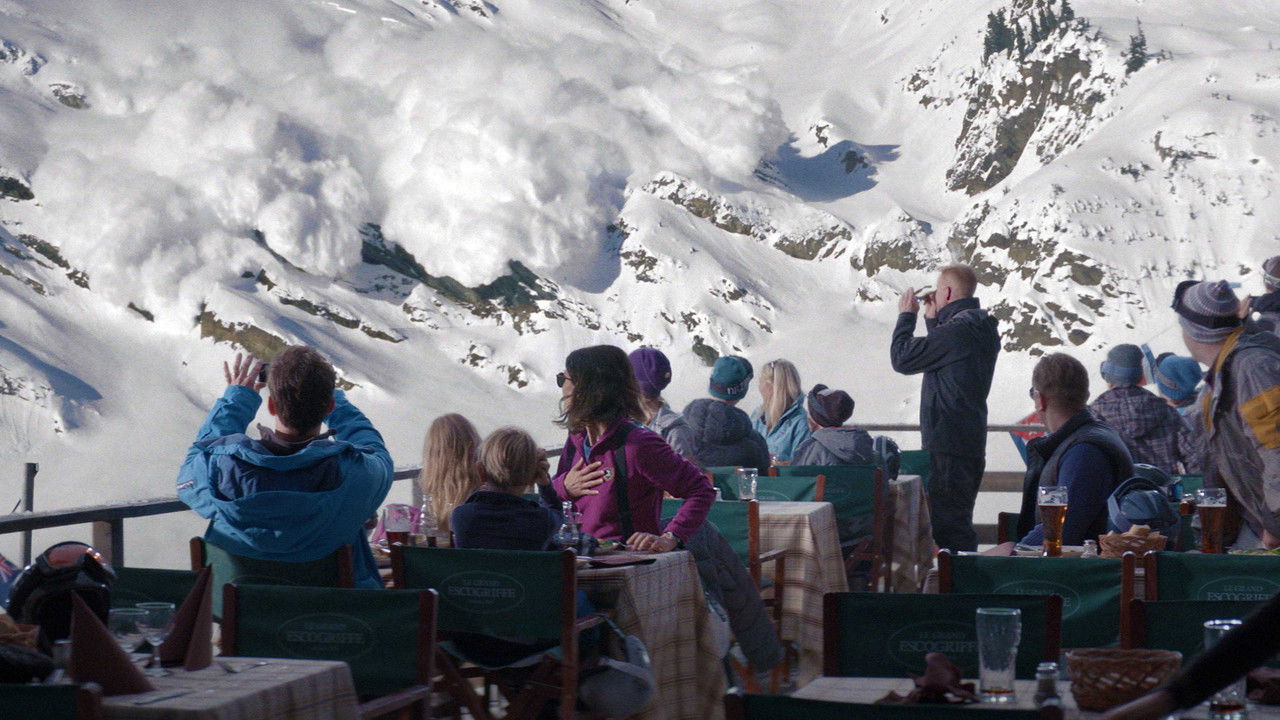
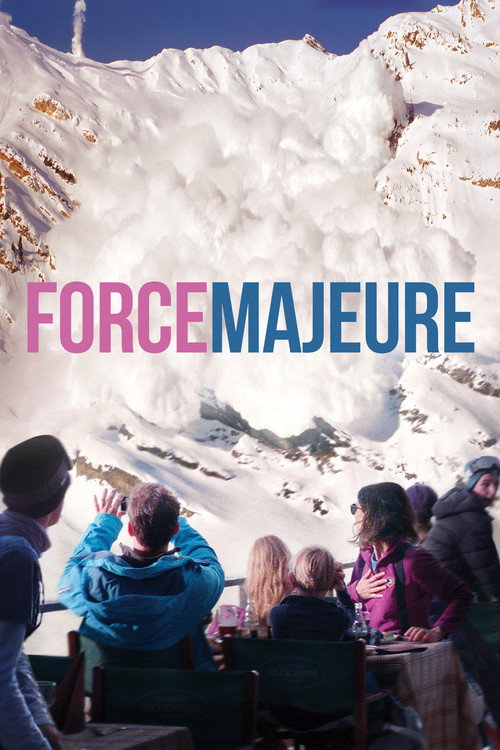
Tomas and Ebba have brought their two children to a ski resort in the French Alps for a family holiday. During lunch on a terrace, a controlled avalanche comes down the mountain, looks for a moment as though it won't stop, and engulfs them in a cloud of snow. Tomas grabs his phone and runs. Ebba stays and shields the children. When the danger passes and everyone is fine, what remains is a question nobody wants to ask out loud.
Ruben Östlund doesn't let it go. Not for one minute, not for the rest of the film. Tomas denies it happened the way it did. Ebba keeps bringing it up, at dinner with friends, in front of strangers, in the corridor of the hotel. Every conversation becomes a trial, and the comedy, because it is often very funny, is the kind that makes you squirm. The long, static shots, the hum of the resort machinery and blasts of Vivaldi turn a luxury holiday into a slow-motion disaster.
It won the Jury Prize in Un Certain Regard at Cannes and swept the Guldbagge Awards, including Best Film. It is the precursor to The Square and Triangle of Sadness, and in some ways more devastating: quieter, colder, and with nowhere to hide. Every couple who watches it will have the same conversation on the way home.